
News
Animals as luggage?
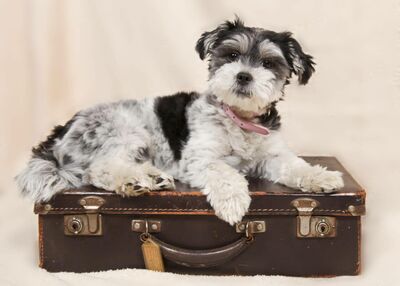
The European Court of Justice recently dealt with a case involving an animal, concerning a claim for damages following the loss of a dog (case number C-218/24). The plaintiff was about to board a flight with her dog, but due to its size, it was only permitted to travel in the cargo hold. This meant that, like luggage, the animal had to be checked in separately and loaded onto the plane by designated staff. During this process, however, the dog escaped from its transport crate and could not be recaptured.
This is where the problem arose. Anyone who loses their luggage on a journey is entitled to compensation, and this is what the pet owner demanded: 5,000 euros.
However, since this was an animal, it is questionable whether the same standards can be applied as for ordinary luggage.
According to German law, there is a separate provision for animals, which states that while animals are not considered property, the relevant provisions still apply (see Section 90a of the German Civil Code). However, this case involved a cross-border flight and is therefore subject to the Montreal Convention. This provides for compensation of up to approximately €1,600–1,700 for lost luggage. It is debatable whether animals are considered luggage or property in an international context. The European Court of Justice cites Article 13 of the Treaty on the Functioning of the European Union, which describes animals as 'sentient beings'.
Nevertheless, this does not alter the legal consequence of compensation being paid in the event of loss, as with regular lost luggage. The article merely states that special care must be taken and that their welfare must be considered during transport. Therefore, the plaintiff's claim for damages was excessive, and she was only awarded the amount provided for in the Montreal Convention. However, the legal act allows for agreements to be made with the airline that differ from this.
Source: Pixabay/dog-4072653_1280