
News
Holidays with your pet
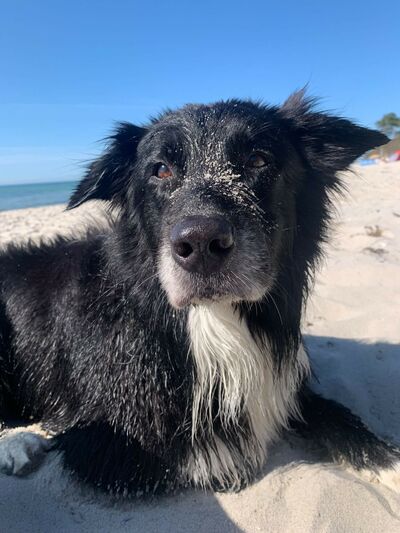
The holiday has been planned and all family members are coming along. As we know, this can also include furry friends. Fortunately, the right to freedom of movement under Article 11 of the Basic Law also applies to animals, enabling them to enjoy the same freedom.
Thanks to the harmonised directive, this right applies to dogs, cats and, perhaps surprisingly, ferrets. A maximum of five animals are permitted to travel. Anyone wishing to take more than five animals with them must prove that they are participating in a competition, exhibition or sporting event, and that the animals are older than six months. The only requirement is to carry a valid EU pet passport, provided the destination is within the EU. This passport contains important information about the animal, such as the microchip number and proof of a current rabies vaccination. However, if you are planning to travel with your pet to Finland, Ireland, Malta, Norway or Northern Ireland, there is an additional requirement to consider. These countries require a health certificate from an approved veterinarian confirming that the animal is free of the tapeworm Echinococcus multilocularis.
The above applies to travel from one EU country to another.
Travel from a third country to an EU country is still possible, but only upon presentation of an EU animal health certificate. This certificate must be issued within ten days of the animal's arrival in the EU, which is a fairly tight timeframe. Additionally, a mandatory provision stipulates that a declaration must be attached stating that the animal is not travelling for commercial purposes, such as breeding.
It is also possible to travel with a rabbit or parrot, although this is unusual. However, the national entry regulations of the destination country must be observed, as the EU pet passport is only valid for cats, dogs and ferrets.