
News
More safety, less CO2: The call for a speed limit
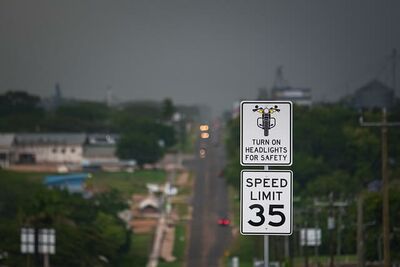
More safety, less CO2: The call for a speed limit: slow down! A demand from the police and environmental associations. For many, the freedom to drive as fast as they want is part of German cultural heritage. However, faster cars will also harm the climate and safety.
The question is no longer whether a speed limit will be introduced, but how long Germany will continue to go its own way.
Specific demands
Coalition groups (e.g. Deutsche Umwelthilfe and Greenpeace) are calling for lower speed limits, particularly on motorways.
Germany usually does not have a specific speed limit on motorways, but drivers are limited to 130 km/h. This is set to change, with a general speed limit on motorways now on the agenda. Outside built-up areas, the speed limit should be reduced to 80 km/h, and within built-up areas, to 30 km/h instead of 50 km/h. These expectations are based on the Federal Administrative Court’s climate protection ruling. The purpose: Less car crashes and increased climate protection.
A speed limit saves lives. According to experts, speed limits are a significant step towards improving road safety. 2.4 million traffic accidents occurred, resulting in 2,780 fatalities, which is a significant number. However, in order to ensure more than just road safety, climate protection is also being pursued. Consequently, speed limits could save several million tonnes of CO₂ annually.
View across the border
In contrast, different speed limit regulations apply in neighbouring countries, as well as in Spain and Portugal.
1. Neighbouring states of Germany:
Denmark, Poland, the Czech Republic, Austria, Switzerland, France, Luxembourg, Belgium and the Netherlands are considered for comparison.
The speed limit on motorways is generally 120 km/h, with only Poland allowing a higher speed limit of 140 km/h. On expressways and outside urban areas, the speed limit is generally between 80 and 110 km/h. One exception is Austria. There is an environmental speed limit indicated by concrete signage.
2. Spain and Portugal
Spain and Portugal have clear and consistent rules. In both countries, the speed limit is 120 km/h on motorways, 100 km/h on dual carriageways, and 90 km/h outside built-up areas. These are clear, easy to control and in line with European standards.
3. Italy
In Italy, the standard speed limits for passenger cars and vans on Italian motorways (autostrade) are 130 km/h and 90 km/h on non-urban roads.
Comparison
While Spain, Portugal and Germany all have concrete borders, Germany takes a different approach.
Other countries have differences in detail, but the principle is the same: a maximum speed is regulated.
Germany is an exception.
While other countries impose clear speed limits, Germany does not enforce a general speed limit on motorways, only recommending a speed limit. Thus, Germany stands alone, not only in comparison with other European countries, but also in its immediate vicinity.
While Europe focuses on borders, Germany focuses on habits.
Finally, we would like to mention the 'Going Abroad' app. It provides an overview of the traffic rules of the European Union's member states:
Source: Pixabay/Speed Limit 7695133
https://pixabay.com/photos/speed-limit-sign-35-mph-kmh-7695133/
Source of speed limit information: https://www.adac.de/verkehr/recht/verkehrsvorschriften-ausland/tempolimits-ausland/