
News
No more drunk driving!
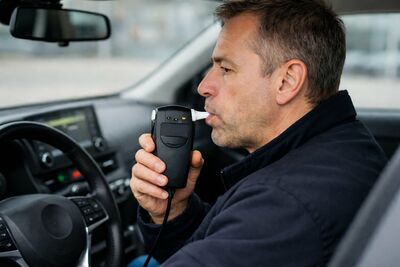
As to a study of the European Comission "about 25% of all road fatalities in Europe are alcohol related whereas about only 1% of all kilometres driven in Europe are driven by drivers with 0.5 g/l alcohol in their blood or more. As the Blood Alcohol Concentration (BAC) in the driver increases, the crash rate also rises. The increase in crash rate that goes with increasing BAC is progressive. Compared to a sober driver the crash rate of a driver with a BAC of 0.8 g/l (still the legal limit in 3 of 25 EU-member states) is 2.7 times that of sober drivers."
Given this background, it is no wonder that alcohol interlocks (“alcolocks”) are not a new technology and are awidespread topic of discussion and research, in the EU and beyond (DACOTA; TIRF; ETSC) and have been used for many years, particularly in fleet vehicles and offender rehabilitation programmes.
However, they have become significantly more relevant legally and technically in recent years due to EU-wide regulatory initiatives aimed at reducing alcohol-related traffic accidents. In 2024 alone, approximately 35,100 traffic accidents in the EU involved alcohol, highlighting the urgent need for preventive measures.
This article provides an overview of the EU regulatory framework and automotive manufacturer practices, paying particular attention to BMW's current approach and the advanced implementation of alcolocks in Scandinavian commercial vehicles, particularly trucks.
2. EU Regulatory Framework
Since July 2022, EU vehicle safety regulations have required all new vehicle types to be technically prepared for the installation of alcohol ignition interlocks (EUR-Lex.
This obligation does not require manufacturers to install alcolocks as standard equipment, but rather to ensure that vehicles are 'alcolock-ready', providing standardised electrical and technical interfaces for easy retrofitting.
The legal objective is clear: to facilitate the future use of alcolocks, particularly in contexts such as:
- Court-ordered driving restrictions;
- Fleet and commercial vehicle operations;
- Public-sector and authority-operated vehicles.
As a result, nearly all major automotive manufacturers operating in the EU - among them the Volkswagen Group, BMW, Mercedes-Benz, the Stellantis brands, Renault, Hyundai/Kia, Toyota Europe and Volvo Cars - now comply with these requirements by design.
3. Manufacturer-specific approaches
3.1 Passenger car manufacturers
Historically, only a small number of passenger vehicles have been offered with factory-integrated alcolocks. Notable examples include:
Volvo Cars, which previously offered integrated systems (e.g. 'Alcoguard'), primarily for the Swedish market and fleet customers.
Saab did also work on integrated solutions as part of research and development projects.
However, in most cases, manufacturers rely on aftermarket or dealer-installed solutions rather than standard factory installation.
3.2 BMW’s current concept
BMW has recently presented a modernised alcolock concept that aligns with EU regulatory goals. Unlike earlier systems, which were permanently integrated into the vehicle, BMW’s approach relies on external devices.
A digital vehicle key,
A breathalyser;
and a smartphone application connected via Bluetooth.
The breathalyser measures the driver’s alcohol level and sends the result to the smartphone, which then communicates with the vehicle. If the measured value exceeds the legal limit, the engine remains disabled. Importantly, non-driving vehicle functions, such as heating, ventilation and infotainment, remain usable.
While this approach is technologically innovative, it raises legal and practical questions, including:
- Dependence on smartphone functionality;
- Bluetooth connectivity reliability;
- potential issues arising from poor network coverage;
- Uncertainty regarding whether a test must be conducted at the start of every journey.
From a legal perspective, these factors may affect practicability, enforceability and liability, particularly in professional or court-mandated contexts.
4. Scandinavian practice: Focus on commercial vehicles
4.1 Sweden
Sweden is widely regarded as a European pioneer in the practical deployment of alcohol interlocks, particularly in commercial vehicles. The use of alcohol interlocks is particularly common in:
- trucks,
- buses;
- fleet vehicles;
- government and authority-operated vehicles.
Manufacturers such as Volvo Trucks and Scania offer alcolock systems as dealer-installed or factory-supported options. In certain public-sector contracts and authority-related operations, alcolocks are effectively mandatory for vehicles weighing over 3.5 tonnes.
Consequently, the proportion of Scandinavian trucks equipped with alcolocks, either factory-installed or retrofitted, has increased significantly in recent years.
4.2 Norway
Norway has introduced similar safety programmes requiring alcolocks for specific vehicle categories, particularly buses and minibuses, as part of its broader road safety strategy (e.g. 'Vision Zero' initiatives).
5. Legal Assessment and Outlook
From a legal standpoint, alcohol ignition interlocks are a preventive regulatory tool rather than a punitive one. EU legislation focuses on technical preparedness, leaving implementation decisions to national legislators, courts, fleet operators and contracting authorities.
Key legal issues going forward include:
- Standardisation of technical requirements;
- Data protection and privacy concerns, especially when smartphones and cloud services are involved.
- Liability in cases of system malfunction;
- Proportionality and reasonableness in mandatory use scenarios.
Although systems such as BMW's external-device solution demonstrate technological progress, their effectiveness and legal robustness will depend on reliability, user acceptance and regulatory clarity.
6. Conclusion:
Alcohol interlocks are becoming an increasingly integral part of European road safety policy. Although passenger vehicles remain largely 'alcolock-ready' rather than equipped by default, the experience of Scandinavia — particularly in commercial transport — demonstrates that widespread and effective implementation is both technically feasible and legally manageable.
Whether newer, smartphone-based solutions will prove superior to traditional integrated systems remains to be seen. Nevertheless, alcohol interlocks are an important tool for reducing alcohol-related traffic accidents and are likely to gain further legal significance in the coming years.
Picture: AI generated