
News
Two Counters, One Cab
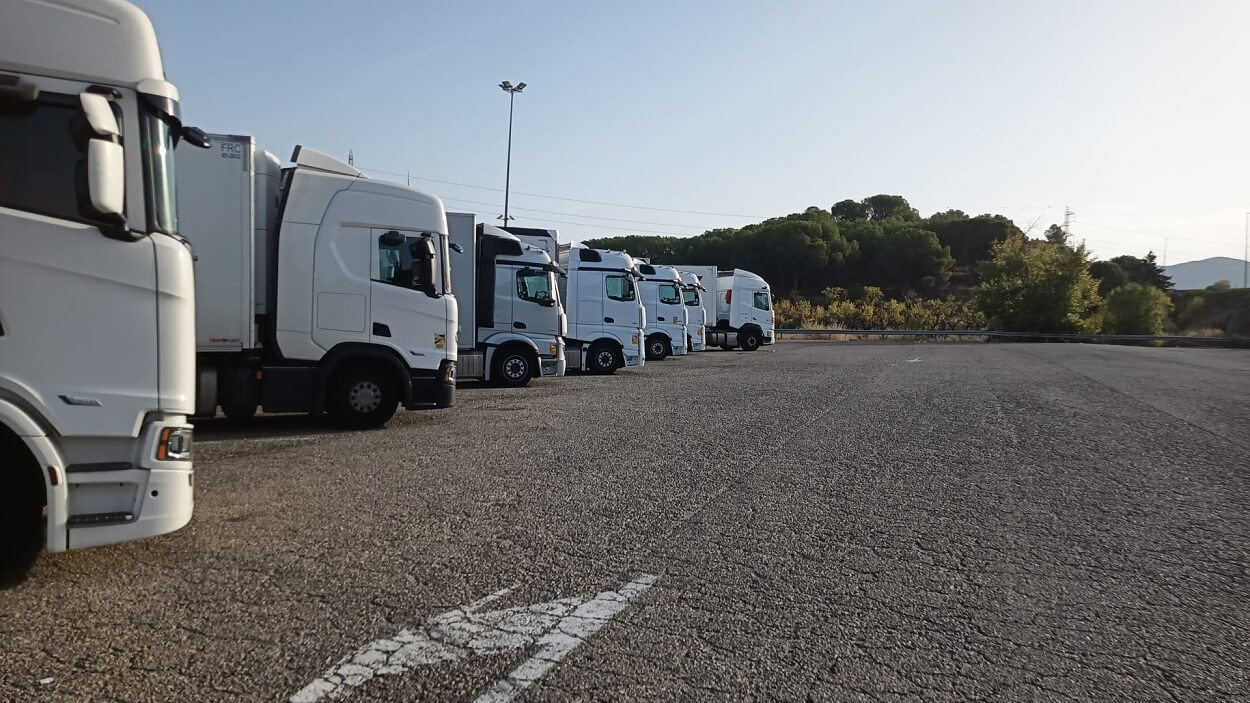
Most transport offices still keep two separate files. Border formalities belong to the driver and his passport. Driving and rest times belong to the vehicle and its tachograph. That division has stopped working. Since the summer of 2026 both systems count automatically, and on a growing share of cross-border journeys they are counting the same movement from two directions.
The tachograph became a witness at the border
Article 8(1) of Regulation (EU) No 165/2014, in the version introduced by Regulation (EU) 2020/1054, requires the vehicle position to be recorded automatically at the beginning and at the end of the daily working period, after every three hours of accumulated driving, each time the vehicle crosses the border of a Member State and each time it carries out a loading or unloading operation. The second version of the smart tachograph takes that position from the satellite signal and a stored digital map. What used to be a country symbol typed in at the first stop after the border is now a machine record with a time and a position attached to it.
The equipment timetable has closed as well. New heavy vehicles have required the second-generation smart tachograph since 21 August 2023. Vehicles used outside their Member State of registration had to be retrofitted from analogue and older digital devices by 31 December 2024, and from the first version of the smart tachograph by 19 August 2025. Since 1 July 2026 the obligation reaches goods vehicles over 2.5 tonnes used in international transport and cabotage, a segment that had never dealt with driver cards, download cycles or archiving duties before.
The border began to count the driver
At the same time the Entry/Exit System under Regulation (EU) 2017/2226 moved from a staged rollout that began on 12 October 2025 to full operation on 10 April 2026. The rule it enforces is not new: Article 6(1) of the Schengen Borders Code allows visa-exempt third-country nationals 90 days in any 180-day period, and that rolling count has applied since 2013. What is new is that the count is exact, automatic and retrievable at every crossing, instead of depending on a border officer reading faded stamps.
For a driver employed by a carrier established in Serbia, Bosnia and Herzegovina, Montenegro or North Macedonia, the arithmetic is unforgiving. A day waiting at a consignee, a night at a loading bay and a weekend spent under a customs seal all count as days of presence in the Schengen area. Aircrew and seafarers are treated separately under Annex VII to the Borders Code. Road transport is the mode in which the driver is counted like a tourist.
The deadline expires today
On 31 August 2026 hauliers parked their trucks outside the EU delegations in Belgrade, Sarajevo, Skopje and Podgorica. A working-group meeting in Brussels followed on 1 September. The Commission spokesman Markus Lammert said afterwards that the 90/180 rule itself would not change, that the difficulties of highly mobile workers had the institution’s full attention and that bilateral arrangements were under discussion. The four national associations read that as an answer in the negative and kept the date they had set. Freight traffic towards the Union is to stop from midnight today, at 21 crossings on the Serbian side alone and at crossings in the three other states, with controlled passage at the intermodal terminal of the Port of Novi Sad and no end date announced.
The precedent is eight months old. At the end of January 2026 the same four associations closed more than twenty crossings for five days, stopping the corridor that links the Union with Turkey and the Middle East and reaching the Adriatic port of Bar; the loss in exports was put at roughly 100 million euro a day. The action was called off after the Commission presented its migration strategy on 29 January, which undertook to examine longer short-stay arrangements for certain categories of third-country professionals. The draft EU visa strategy now names professional road-freight drivers as a group that needs more than 90 days in 180. Recognition on paper is not an instrument, and no instrument has followed. What the carriers report instead is that the tolerance at the booth has gone: a driver on day 91 is turned back, and the undertaking loses him for the rest of the reference period.
Behind the protest sits a legal impasse rather than a negotiating posture. Residence law and transport law pursue different objectives, rest on different legal bases and share no exemption for professional drivers. Nothing in the driving-time rules gives a driver a right to be present; nothing in the border rules asks what the vehicle was doing. The two counters run in parallel, and the operator carries the difference.
In the members’ area
The full analysis sets out the retrofit deadlines and what each of them actually triggers; which positions the tachograph records on its own and which entries still depend on the driver; how the automatic record changes the evidential position in cabotage and posting checks; where the recorded data goes today, and why the proposals for a central European transmission of tachograph data are still proposals; the state of play under the AETR for carriers established outside the Union, including the pending amendment and the cards already issued in the region; what was and was not conceded in Brussels on 1 September, including the counting models put on the table; and a set of practical points for operators exposed to the corridor.