
News
When Europe Tells Trucks to Stop: Summer Driving Bans 2026
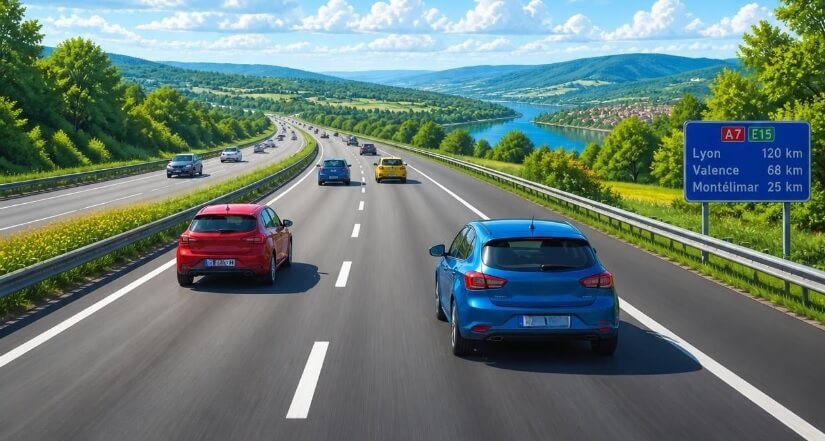
Every July, the same scene repeats itself across Europe: motorways fill with holidaymakers, and heavy goods vehicles are ordered off the road. What looks like a simple traffic measure is, in legal terms, a patchwork. There is no EU-wide summer driving ban. Each country decides for itself when trucks must stop, which vehicles are covered, which cargo is exempt – and how hard it punishes those who get it wrong.
Germany: Saturdays off in the holiday season
In addition to the year-round Sunday and public-holiday ban, Germany activates its holiday travel regulation every summer. On all Saturdays from 1 July to 31 August – in 2026, that means 4 July to 29 August – trucks over 7.5 tonnes and trucks with trailers may not use designated motorways and federal roads between 7 a.m. and 8 p.m. Combined road/rail and port transport and easily perishable goods are exempt. The fines are moderate by European standards – but the disruption to a tight delivery schedule is not.
The Alpine transit states take a harder line
Austria adds summer Saturday bans on its key transit corridors, including the Inn Valley and Brenner motorways (A12/A13), and – notably – on selected federal roads. The declared aim is to stop trucks from dodging motorway bans by cutting through Tyrolean villages.
France concentrates its restrictions on the so-called Black Saturdays of July and August, when additional daytime bans apply on top of the standard weekend ban that runs from Saturday 10 p.m. to Sunday 10 p.m. A violation is anything but trivial: drivers face fines of up to €750, companies up to €3,750, alongside possible immobilisation of the vehicle and licence sanctions.
Italy publishes an annual ministerial calendar of ban days, which in summer extends well beyond Sundays to Saturdays and selected peak travel days. Sanctions range from roughly €430 to €1,730 – and, uniquely, include suspension of both the driving licence and the vehicle registration for one to four months.
The East: six calendars that refuse to align
• Poland bans vehicles over 12 tonnes in three summer windows – Friday evenings, Saturday mornings and most of Sunday – but grants practical border-related exemptions, for instance for trucks returning from abroad or moving within 50 km of the border.
• The Czech Republic adds a Friday-evening window (5–9 p.m.) and Saturday mornings in July and August on top of its year-round Sunday ban – the Friday slot is the one planners most often miss.
• Hungary imposes the longest continuous block: from Saturday 3 p.m. straight through to Sunday 10 p.m. in July and August.
• Slovakia and Slovenia add summer Saturday bans (Slovakia 7 a.m.–7 p.m.; Slovenia 8 a.m.–1 p.m.), while Croatia protects its coastal routes from mid-June to mid-September – with Saturday bans starting as early as 4 a.m.
• Romania and Bulgaria restrict the Black Sea corridors in summer; Bulgaria’s season starts as early as 1 June, and Romania can add heat-related bans once temperatures hit 25 °C.
North, South-West, and the Swiss exception
• Belgium, the Netherlands and Denmark manage without any general truck driving ban – goods keep moving all summer.
• Spain and Portugal have no national weekend ban either; restrictions are regional and route-specific – a different compliance task, but not a lighter one.
• Luxembourg bans only transit traffic, and only in the direction of France and Germany at the weekend – a directional quirk that rewards careful reading.
• Switzerland has no seasonal summer ban at all – but compensates with a strict year-round regime: a nationwide night ban from 10 p.m. to 5 a.m. and a full Sunday ban, subject to narrow exemptions for urgent goods such as fresh food, animals for slaughter and cut flowers. Liechtenstein mirrors this regime.
Why this matters legally
For transport operators, the summer calendar is more than a scheduling nuisance. Driving-ban violations trigger fines that differ by a factor of ten or more between neighbouring countries, and in several jurisdictions they reach the company, not just the driver. Add immobilised vehicles, confiscated registration documents and the knock-on liability for late delivery under transport contracts, and careful cross-border route planning stops being a competitive advantage – it becomes a compliance obligation.
Members’ area: Our in-depth analysis breaks down the legal bases, sanction frameworks and exemption regimes country by country – including the liability exposure of carriers and dispatchers and practical planning guidance for the 2026 season.