
News
Will boarding passes become even more digitalised?
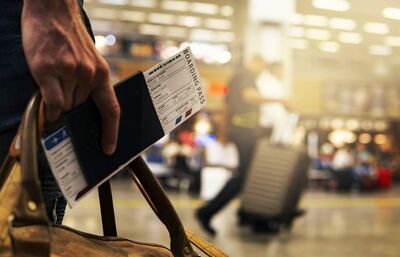
The International Civil Aviation Organisation has announced that major changes are also expected in this area in the near future. The boarding pass in its original paper form will no longer exist. The UN organisation has developed a digital ID card that will work with facial recognition technology, similar to that used in mobile phones. This is expected to result in savings, as it will replace all physical documents at the airport. It should also speed up and simplify airport procedures, as according to the International Air Transport Association, the number of air travellers is expected to increase to eight billion by 2040. This can no longer be handled by airport staff alone, so all relevant data, information or updates will be visible on the digital ID card. Speeding up the process at the airport is not the only reason. They hope this will improve security, as biometric data is unique to each individual, promising greater accuracy.
Countries such as Finland are once again leading the way in this area. They have already launched a pilot project for digital travel documents. Singapore and Amsterdam have also expanded biometric check-in lanes at their airports or introduced facial recognition technology for boarding. The airline Ryanair has already announced that it will be phasing out paper boarding passes, and it is likely that many others will follow suit.
This process brings many advantages, but also has some downsides, as critics point out. Privacy suffers because more and more data is being disclosed and stored in various databases. Data protection may not be guaranteed, and people may feel that they are being monitored, for example through location tracking. However, this concern can be quickly dispelled. The system developed deletes passenger data within 15 seconds of contact with any ‘touchpoint’, such as baggage reclaim.
It is important that this process remains voluntary for each country and that they have their own scope for manoeuvre. Nevertheless, it is to be expected that some countries will follow suit and join the general consensus.
Source: Pixabay/merry-christmas-5219496_1280