
News
Article 10 CMR: The Carrier Has to Prove the Defective Packing
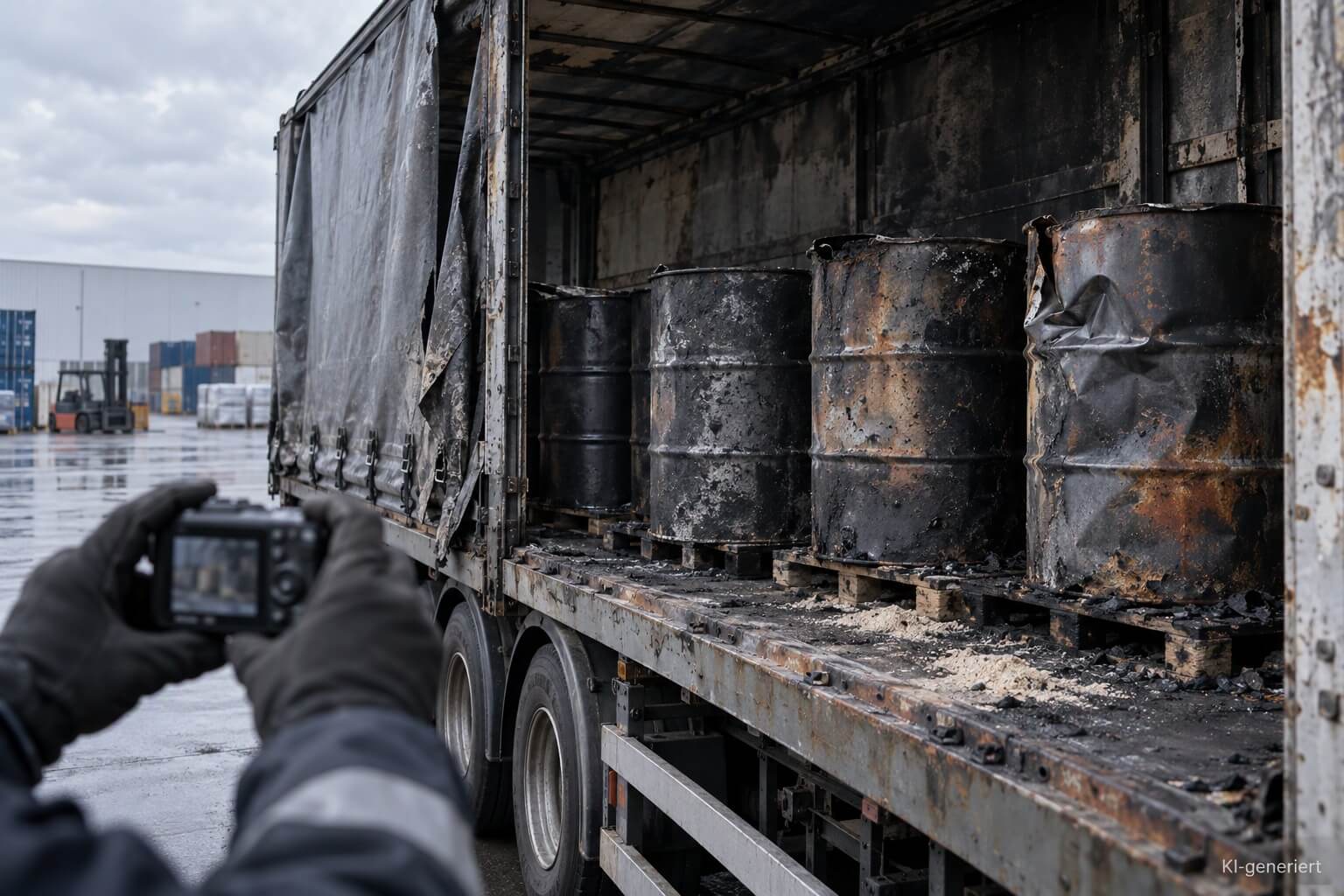
On 8 December 2020 the Czech haulier CN CARGO took over used lithium batteries, ADR dangerous goods shipped as hazardous waste, for international carriage by road. The load caught fire the same day and damaged the carrier’s vehicle. CN CARGO sued the sender, Yusen Logistics (Czech), for CZK 101,626.36 and lost at every instance, finally before the Czech Supreme Court on 25 March 2026 (Nejvyšší soud, 23 Cdo 1455/2025). On 11 November 2026 the court’s Civil and Commercial Division approved its headnote for publication in the official law reports. The headnote (právní věta) reads, in substance: where a carrier relies on Article 10 CMR, the burden of proving the defect in the packing lies on the carrier.
Three routes to the sender
The carrier pleaded three provisions at once. Article 7(1)(a) makes the sender liable for inaccurate or incomplete particulars in the consignment note. The carrier complained that the goods were imprecisely described and the packages not marked as lithium batteries for recycling or disposal. Article 22 requires the sender of dangerous goods to inform the carrier of the exact nature of the danger. Article 10 makes the sender liable to the carrier for damage to persons, equipment or other goods caused by defective packing, unless the defect was apparent or known to the carrier when it took over the goods and it made no reservations about it.
The first two routes failed on the facts. Both lower courts found that the haulier knew it was carrying used lithium batteries, which the sender may prove by other means under the second sentence of Article 22(1). The Regional Court also found no inaccurate particulars in the consignment note and, above all, no causation, since the carrier knew the cargo was hazardous waste.
Steel drums, sand and an inconclusive expert report
On appeal, the Regional Court instructed the haulier under section 118a of the Czech Code of Civil Procedure to state which specific packing defect it alleged and to offer evidence for it. The parties agreed that batteries of this kind are normally packed in steel drums and covered with sand. The haulier said the sand was missing or insufficient. The expert could not establish either point: the photographs, the fire service’s statements and the transport documents did not show whether the drums had contained sand, or how much. The main hypothesis recorded was a technical fault in one of the cells, a risk that no packing could have entirely excluded.
Before the Supreme Court the haulier argued that it should be enough to make the objection plausible. The sender should then have to prove that the packing was adequate. It drew an analogy with the proof of gross negligence under Article 29 CMR. The panel presided over by Judge Pavel Horák dismissed the appeal. It held that the allocation of the burden of proof is governed by the Convention itself and must be read autonomously. Articles 18 and 23(5) show that the Convention allocates the burden of proof where it chooses to. Article 10 contains no special rule, so the general rule applies: whoever derives a favourable legal consequence from a fact must prove it. A carrier claiming under Article 10 must therefore prove the damage, the defect in the packing and the causal link between them. A comparative survey, drawing on other supreme courts, German commentaries and Dutch authority, supported the result.
Who loses when the evidence burns?
Lithium battery fires destroy the evidence, so the burden of proof will usually decide the case. The Czech judgment places it on the carrier and, behind it, on any motor own-damage insurer that pays for the vehicle and seeks recourse against the sender. The sender and its liability insurer will often succeed because nobody can reconstruct how the goods were packed.
On causation the burden is heavier here than in a cargo claim. A carrier that defends a claim for damage to the goods and pleads defective packing under Article 17(4)(b) must also establish the defect, but Article 18(2) then presumes causation once it shows that the loss could have resulted from that risk. Article 10 offers no comparable presumption. In the Czech case the carrier already failed on the defect itself, so the difference would not have saved it.
For carriers and fleet operators the evidence has to be secured before departure: photographs of the drums, their closure and, where possible, their filling. If the packing looks inadequate, a reservation, best entered with reasons in the consignment note under Article 8(2), stops the sender relying on the exception for apparent defects. It does not relieve the carrier of proving defect, causation and damage. For batteries carried for disposal or recycling under ADR packing instruction P909 (P908 or P911 where they are damaged or defective), carriers can ask for written confirmation of the packing method. On the Article 22 point, the carrier’s own appeal records that the lower courts relied on documents bearing UN codes whose receipt the drivers had signed.
Reported case law on Article 10 is thin. The Austrian Supreme Court has separated packing from loading and set a low threshold for an “apparent” defect, while we have not found a published German appellate decision on the provision.
Our members’ analysis compares the position across the contracting states and examines the routes that remain open to carriers and their insurers: Member Login.