
News
Hypoglycaemia at the Wheel: Hoge Raad 3 November 2026
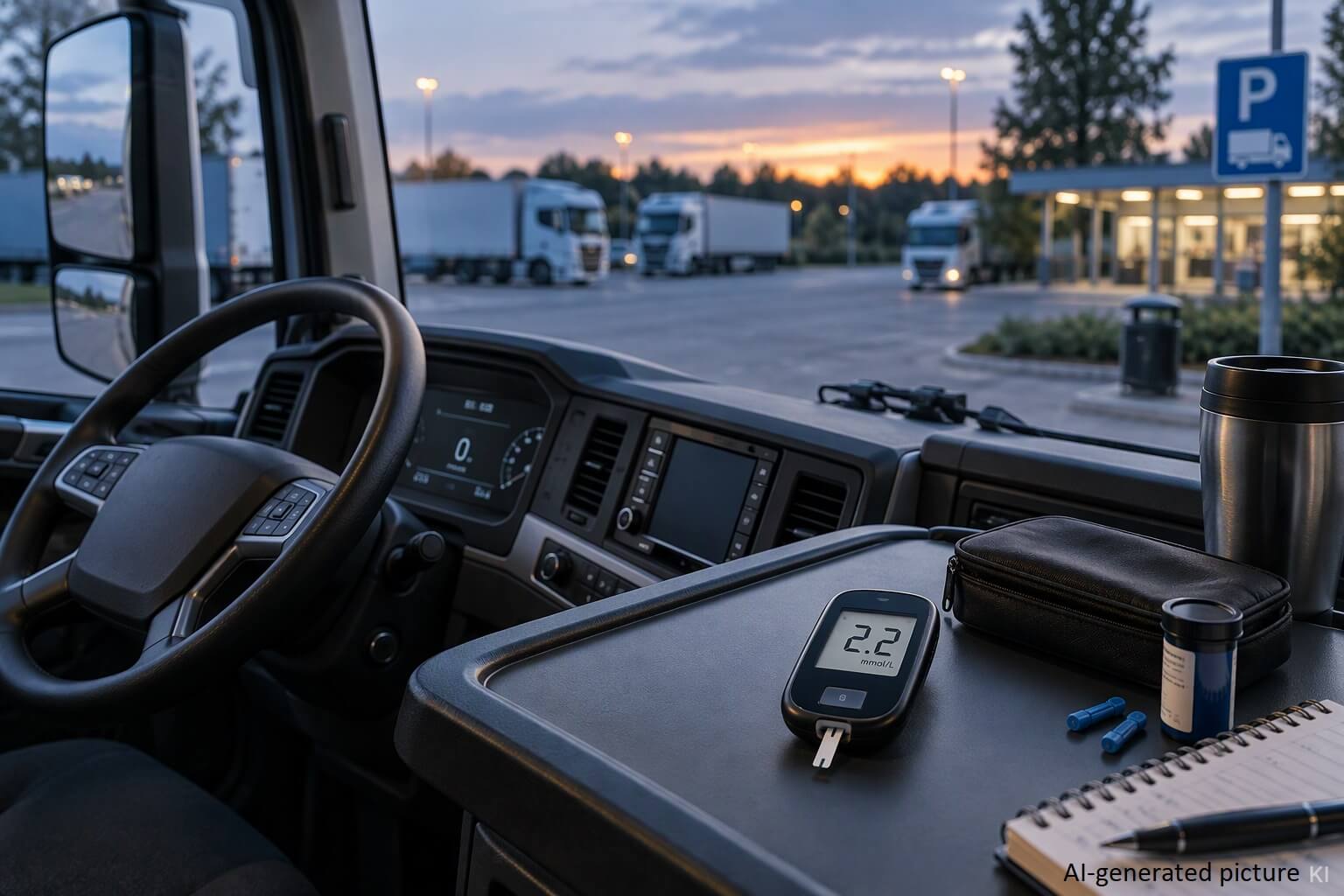
At about 21:45 on 11 March 2019 an articulated lorry carrying dangerous goods from Moerdijk to Amsterdam left the A16 at exit 26, Kralingen, in Rotterdam. The exit is limited to 50 km/h. The lorry was doing 89. The traffic light at the junction with the Jacques Dutilhweg had been red for roughly a minute and a half. The lorry went through it, crossed the verge, hit street furniture and struck the side of a car at around 75 km/h. The car's driver, aged 21, died at the scene.
The lorry driver was found unresponsive. His blood glucose stood at 2.2 mmol/l. He had been diabetic since 1992 and said he remembered almost nothing of the journey. Earlier that evening other motorists had seen the lorry standing without lights in Moerdijk, weaving across the A15 and A16 and driving through a tube of the Drechttunnel that was closed to lorries.
On 3 November 2026 the Dutch Supreme Court, the Hoge Raad, upheld his conviction for causing death by negligence under Article 6 of the Road Traffic Act 1994. The criminal case ends seven and a half years after the crash. The parents' civil claims go back to the court of appeal.
What the driver knew
The Gerechtshof Den Haag based its finding of negligence on the driver's own data. His glucose meter recorded 256 low readings in the 90 days before the crash, 41 of them at or below 2.2 mmol/l. He had suffered hypoglycaemic episodes at work on 26 April 2017 and on 8 February 2019, a month before the collision; the second needed treatment by ambulance staff, and he did not contact his doctors afterwards. He was working days of nearly 14 hours. The court also found that he had impaired awareness of hypoglycaemia, so the warning signs that most diabetics feel before a hypo did not reliably reach him.
The defence offered an alternative explanation: insulin pooling under the skin, released unpredictably, might have caused a sudden drop no one could foresee. The Gerechtshof did not find that scenario plausible. Its conclusion was that the driver, by getting behind the wheel, had accepted the risk of a sudden blackout. The Hoge Raad left that reasoning intact.
The driver had been declared fit to drive by the CBR, the Dutch licensing authority, and his treating physicians. That did not relieve him of responsibility. A professional driver, carrying dangerous goods, was expected to know what his own meter was telling him. The sentence stays at three months' imprisonment, fully suspended, with a driving disqualification of three years and nine months. The cassation proceedings took more than two years; the Hoge Raad found the reasonable time exceeded but, given the fully suspended sentence, attached no consequence to it.
The relatives' claims
The victim's family had joined the criminal proceedings as injured parties, which Dutch procedure allows. Each parent had already received €17,500 in affection damage, the fixed sum Dutch law has provided for close relatives since 2019, paid as an advance outside the criminal case. The Gerechtshof awarded €15,000 in shock damage to the brother and to each parent. The brother's own claim for affection damage was declared inadmissible in the criminal case: siblings are not on the statutory list, and the court found no relationship beyond a normal, loving bond between brothers.
The brother's award survives. He had identified the body, broken the news to his parents and seen video footage of the crash, and the court found he developed post-traumatic stress with hallucinations and flashbacks. The parents' shock damage awards do not survive. They too had identified their son, but they had been told of his death beforehand, and the defence disputed that their confrontation was sudden. The Gerechtshof had made no findings on how the parents were confronted with the accident or its aftermath. Nor had it explained how a shock damage award relates to the affection damage already paid for the same loss. Those points go back to the Gerechtshof Den Haag.
Since the Taxibus judgment of 2002, shock damage requires a recognised psychiatric injury caused by direct confrontation with the accident. Affection damage compensates grief without proof of illness.
Why it matters beyond the Netherlands
For fleet operators, the ruling turns on what the driver knew from his own glucose meter; the court also listed his working days of nearly 14 hours among the facts.
For motor liability insurers the criminal verdict changes little in the victim's direct claim. Most European systems hold the vehicle's keeper or insurer liable whether or not the driver blacked out, and a sudden loss of consciousness is generally not treated as force majeure. The driver's condition becomes relevant for recourse against a driver or policyholder and for the quantification of claims by relatives, where European laws diverge sharply. Germany caps nothing but treats its €10,000 survivor's allowance as orientation. England pays a fixed bereavement sum to a narrow circle and confines psychiatric injury claims to those who witnessed the event or its immediate aftermath. The Netherlands now has to decide how its fixed sums and its shock damage case law fit together.
The Gerechtshof Den Haag now has to answer that question for the two parents in Rotterdam.
The members' analysis compares the treatment of sudden illness at the wheel and of relatives' immaterial damage in the Netherlands, Germany, Austria, England and Wales, France and Italy, and sets out the EU motor insurance framework behind it. [Read the full analysis in the members' area.]