
News
Open border, split rulebook: the driving risk that outlasts the fine
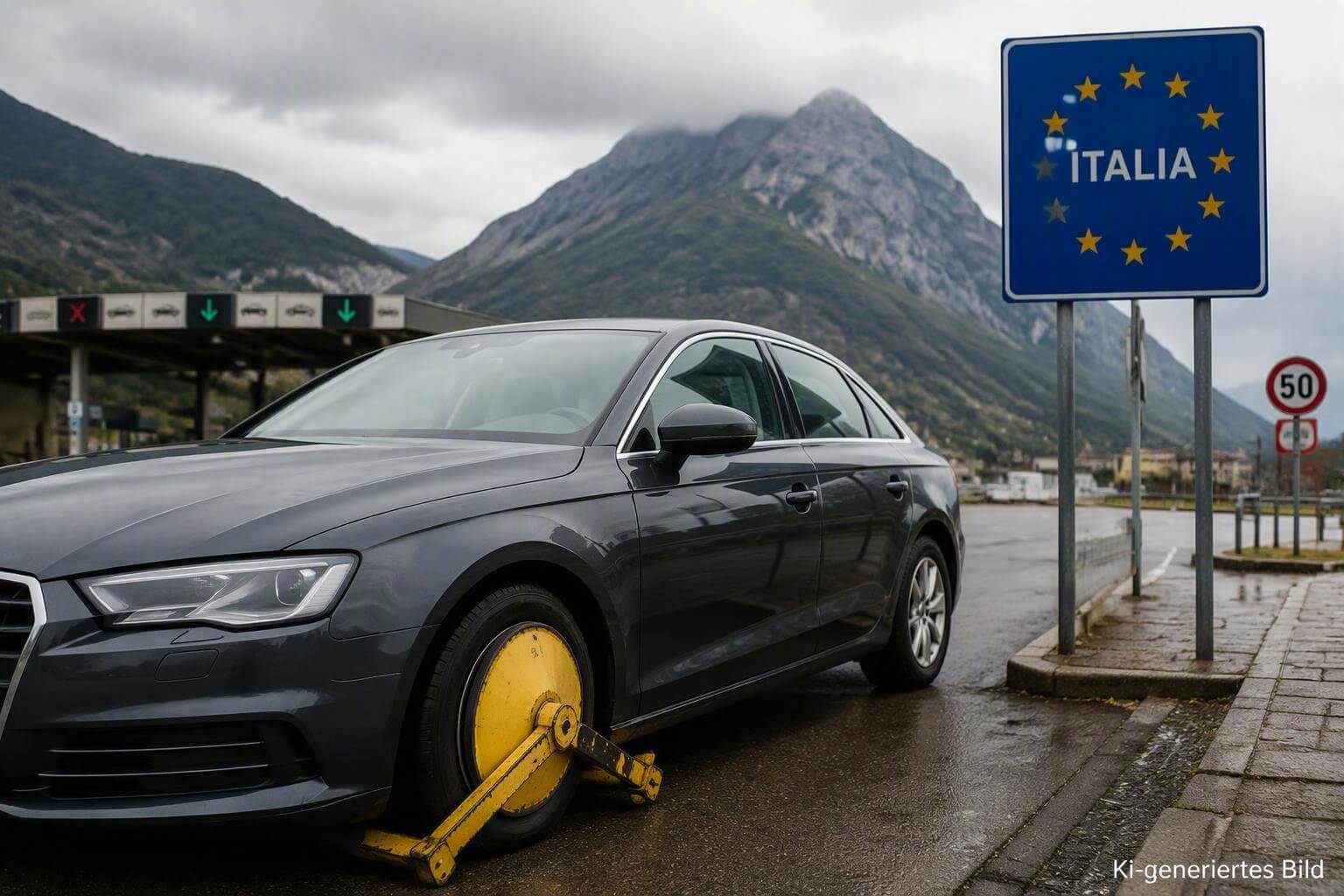
An open border implies a single European road network. However, the consequences of a traffic offence are still split at every frontier. For a fleet, this is measured in vehicles, not euros. While a private motorist may view this as an inconvenience, businesses that own and hire out vehicles see it as an operational and financial risk.
For years, drivers treated a fine imposed abroad as a problem that stayed abroad. This is no longer the case. Under the EU regime for the mutual recognition of financial penalties, a final monetary sanction of €70 or more, including procedural costs, is enforced in the driver’s home state. A speeding offence committed in one Member State is communicated to the driver or the person behind the registration by the relevant authority in their home country weeks later. Paying at the roadside does not close the case, and ignoring the fine does not make it go away.
The vehicle is a different matter. Several jurisdictions seize vehicles on the spot for extreme speeding or serious drink-driving, and after a court hearing, they declare the vehicle forfeit and sell it. This measure is carried out in the country where the offence occurred, so it does not require mutual recognition or the involvement of the home authority. Once the vehicle is gone, crossing back over the border changes nothing.
Operators often overlook the fact that the law also applies to rented and leased vehicles when they consider the size of the fine. Denmark is the clearest case: its seizure powers were designed to target hire and lease cars, and a court there has confiscated and sold a leased vehicle. Austria shows where this is heading. Its Constitutional Court struck down the rule that confined forfeiture to vehicles that the driver owned outright. The court gave the legislature until autumn 2027 to widen the rule on the grounds that a leasing arrangement must not put the vehicle beyond reach. The direction of travel is towards the fleet.
The divergence extends beyond seizure. Permitted blood-alcohol levels range across the continent, and the speed limit at which an offence becomes criminal is set nationally. The same behaviour that results in a fine in one country can lead to criminal charges in the next. A driver crossing several borders in a single journey will encounter each of these thresholds in turn.
Roadside oddities that still bite
The differences are not only in the headline penalties. A few that catch out visiting drivers include the following:
United Kingdom: Splashing a pedestrian by driving through a puddle constitutes careless driving under Section 3 of the Road Traffic Act 1988. In practice, this results in a £100 fixed penalty and three points on your licence, or up to £5,000 if the case goes to court.
Germany, Austria and Switzerland, among others: flashing the headlights or sounding the horn to warn oncoming traffic of a speed check is an offence. Light and sound signals are reserved for genuine danger.
Italy: Many historic centres are closed as limited-traffic zones (ZTL). Entering without a permit is monitored by cameras and results in a fine; this applies to hire cars too, since the fine is sent to the vehicle's registration.
Switzerland: In a Blue Zone, the arrival time on the parking disc is rounded up to the next half hour, which quietly lengthens the free parking period.
Members' area
A jurisdiction-by-jurisdiction analysis sets out the seizure and forfeiture regimes in Austria, Denmark, Italy and Switzerland.
It also covers the drink-driving thresholds that separate an administrative offence from criminal liability and explains what the Austrian Constitutional Court’s ruling means for leased fleets from 2027. The analysis also covers the practical limits of cross-border enforcement and explains which sanctions a home authority will actually enforce and how the rules apply to leased and hired vehicles. Links to the governing provisions are provided.