
News
Polish plates on Italian roads: when registration and use part ways, the bill goes to Warsaw
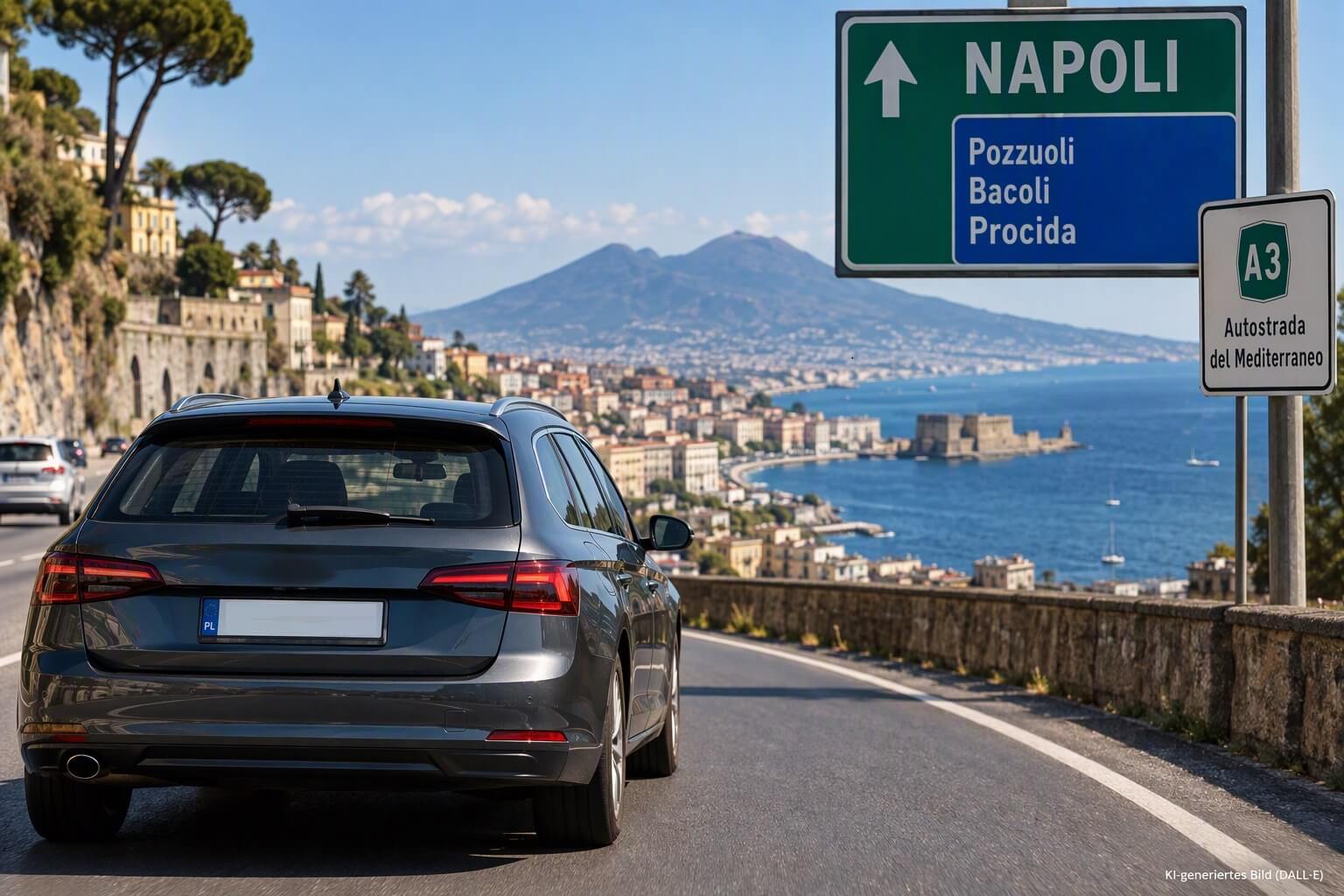
In 2025 the Polish Motor Insurers’ Bureau (PBUK) paid out 41.7 million złoty for accidents caused abroad by uninsured vehicles on Polish plates. A year earlier the figure was 25.7 million. The number of such claims doubled within twelve months, from 1,574 to 3,188. Italy accounts for a disproportionate share of that increase. Between 2021 and 2025 the number of Italian claims involving Polish-registered vehicles rose almost seventeenfold and the amounts paid almost tenfold. Italy now accounts for roughly 44 per cent of what PBUK pays out for uninsured vehicles abroad, around 18.4 million złoty in 2025, up from about 6.9 million the year before.
How the structure works
The structure itself is straightforward. An Italian resident wants a car but not the Italian cost of keeping it. An intermediary, usually advertising online, arranges for the vehicle to be registered in Poland in the name of a Polish company or a Polish individual acting as nominee owner. Polish law makes this possible: a vehicle entrusted to a Polish entity by a foreign owner is registered at the seat or residence of that entity. The car receives Polish plates and documents and never sees Poland again. The Italian user drives on.
What the user saves is considerable. Compulsory motor liability insurance (RC auto) cost on average around EUR 410 in Italy in early 2025, according to the Italian supervisor IVASS, with considerably higher premiums in Campania and other southern regions. The Polish equivalent averages a little over PLN 500, roughly EUR 120. On top come the Italian ownership tax (bollo auto) and the surcharge for high-powered cars (superbollo). Polish commentators add what users regard as a lower practical exposure to Italian camera-based enforcement.
The real exposure arises when the Polish cover lapses, is not renewed or was never in force.
Why Poland pays for Italian accidents
This is the part that surprises many practitioners outside the insurance world. Under the Motor Insurance Directive 2009/103/EC, a vehicle bearing a valid registration plate is deemed to be “normally based” in the state that issued it. Within the EU, member states do not check the insurance of such vehicles at the border or on the road as a matter of routine. Instead, the national insurers’ bureaux settle claims for each other and reimburse each other on the basis of the vehicle’s registration state, even where no valid liability insurance is in force.
A victim in Italy injured by an uninsured car on Polish plates is therefore not left without compensation. The Italian bureau handles the claim under Italian law and is reimbursed by PBUK. PBUK then has a recourse claim against the driver and the registered owner. In practice that claim is hard to enforce: the owner is a nominee, the driver lives in Italy, and assets are rarely within reach. The largest single case reported so far concerns a fatal accident caused by an uninsured Fiat Panda on Polish plates, with a liability of around EUR 1.3 million. PBUK is financed by Polish motor insurers, so the losses ultimately feed into premiums paid by Polish policyholders.
What Italy may and may not do
Italy tried the blunt approach first. In 2018 it prohibited residents of more than 60 days from driving vehicles registered abroad. In December 2021 the Court of Justice held in C-274/20 (Prefettura di Massa Carrara) that such a general ban, irrespective of how long and how intensively the vehicle is actually used in Italy, breaches the free movement of capital under Article 63(1) TFEU.
Since February 2022, Article 93-bis of the Codice della Strada has applied instead. It is more nuanced. A resident driving a vehicle owned by a person or company established elsewhere in the EU must carry a document with a certain date showing the title and duration of use; use exceeding 30 days in a calendar year, whether continuous or not, requires an entry in a special register (REVE). This has an uncomfortable consequence for enforcement: a Polish-registered car in Italian hands may be lawful under Italian law if the statutory requirements are met. The legal difficulties lie elsewhere: in missing insurance, missing Polish periodic inspections and nominee ownership that exists only on paper.
Enforcement across two jurisdictions
Poland controls registration, roadworthiness testing and insurance of these vehicles. Italy controls their use. Neither system sees the whole picture. A Polish-registered car kept permanently in Naples cannot attend its periodic inspection in Poland without leaving Italy, yet PBUK reports cases of inspections certified for vehicles that were never there. Italian police can check insurance status through EU data exchange, but a fine issued to a Polish nominee company is only enforceable through cross-border cooperation instruments, with the delays this entails. Local checks, such as those recently reported in Naples, address the symptom on the street.
What starts as a traffic-law matter quickly becomes an administrative, insurance and potentially criminal matter, involving users, intermediaries, nominee owners, inspection stations, insurers and two national administrations.
Open questions
PBUK has proposed that inspection stations photograph vehicles presented for their first Polish inspection and that the vehicle itself be shown at registration. In Italy, the draft of a new Highway Code, prepared under the delegation in Article 35 of Law 177/2024 and open to public consultation until 13 September 2026, provides, according to press reports, for registration of foreign vehicles used by residents and for compulsory Italian liability insurance. As of late September 2026 no legislative decree had been adopted. Neither measure touches the underlying tension: EU law attaches the guarantee mechanism to the registration plate, while the underlying insurance risk follows the place of permanent use.
How far a member state may go in establishing where a car is really based, without falling foul of C-274/20, remains the central question. The members’ area analysis compares the rules in Italy, Austria, Germany, France, Spain, Belgium and Poland and sets out what the divergences mean for fleet operators, lessors, insurers and claimants.